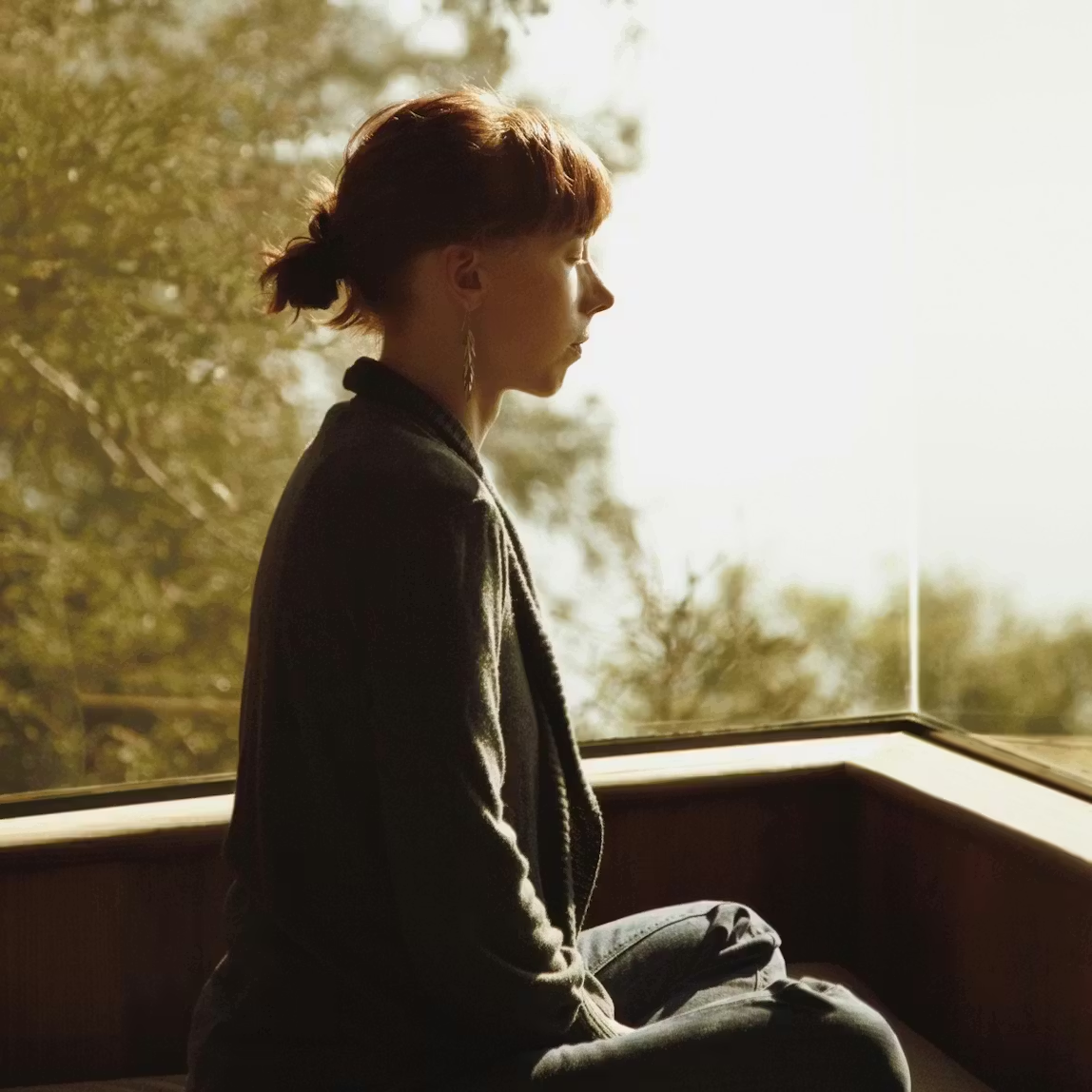
Why meditating without guidance often doesn’t work

Apps, books and self-taught mindfulness ask you to actively hold your attention — which is exactly why most people stop within a few weeks. Personal instruction works differently.

Free and without obligation · about an hour · all your questions answered

or read about personal guidance

400+peer-reviewed studies
200+universities
8m+people learned TM
60+ yrsof research

The most common reason meditating without guidance stops working is that most self-taught methods — apps, books, videos — ask for active concentration: directing attention and pulling it back whenever it wanders. That takes ongoing effort and discipline, and without personal correction, drop-out rates are high. Transcendental Meditation works the opposite way: a personal mantra lets the mind settle effortlessly, taught in four sessions by a certified teacher with lifelong follow-up included.

7 signs that meditating without guidance isn’t working

These are the most commonly reported signs among people who try to meditate on their own, without a teacher to check in with:

None of this means you’re “bad” at meditating — it usually means the method itself relies on effort and self-discipline rather than a technique that works on its own. See how personal guidance addresses each of these directly.

Person practising TM, without needing an app

Why meditation apps often don’t hold focus

Most meditation apps and self-guided mindfulness exercises train you to focus your attention — usually on the breath — and consciously bring it back whenever it wanders. That redirecting is the mechanism itself, and it takes real effort to sustain, especially during a demanding workday. Apps and group classes give no personal feedback when it isn’t working, which is why drop-out rates for self-taught meditation are high.

TM is built differently. A personal mantra lets the mind settle on its own, without concentration or control — there is no attention to hold onto that can slip. That is also the core difference with mindfulness apps used at work: mindfulness is an active skill you practise, while TM is taught one-to-one so the technique is corrected on the spot, not left to a generic script. Compare the two in more depth on TM versus mindfulness.


No concentration needed
On-the-spot correction
No app or posture required
One standardised method

8 causes of meditating incorrectly as a beginner

Is a special posture actually required?

No — this is one of the most common misunderstandings. TM is practised sitting comfortably in a normal chair with the eyes closed; no cross-legged position, mat or special posture is needed, which is also what makes it practical to fit into a working day, including a second session at the office.

Want to weigh it up in person?

The simplest first step is a free introductory talk. A certified teacher explains why self-taught meditation often stalls, how personal guidance is different, and answers your questions — no commitment.

Find a free talk near you

App or self-study, or personal guidance?

What matters for actually sticking with it App or self-study Personal guidance (TM)
Correction when something's offNoneOn the spot, by a certified teacher
Effort requiredActive concentrationCompletely effortless
Posture requirementsOften strict rulesAny normal chair
Standardised methodVaries by app or sourceOne method, refined 60+ years
Can you ask questionsNoLifelong, at any centre worldwide
Independent research baseVaries, often little800+ peer-reviewed studies

What independent sources say

“Transcendental Meditation is a simple, natural technique … this form of meditation gives deep rest to the body and the mind experiences inner peace, without using concentration or effort.”

Mayo Clinic

“Perhaps its greatest benefit is that it is relatively quick to learn and easy to master — no weeks or months of practice before you see results.”

Forbes Health

“According to both the Australian CSIRO and the American Heart Association, the TM technique is the only meditation technique proven to effectively lower high blood pressure.”

CSIRO & American Heart Association

“A 2009 study found that Transcendental Meditation helped reduce stress in students, while another showed it helped lower blood pressure, anxiety, depression and anger.”

Cleveland Clinic

Research behind this page

Meta-analysis of 146 independent studies: TM was more than twice as effective at reducing anxiety as other relaxation and concentration-based techniques.

Eppley KR, Abrams AI, Shear J — J Clin Psychol, 1989

Regular TM practice is associated with increased EEG brain coherence and more orderly activity in areas involved in attention — a structurally different mechanism than effortful, concentration-based techniques.

Travis F, Grosswald S, Stixrud W — Mind & Brain, 2011

Among 96 teachers and administrators, four months of TM — taught and followed up personally — was followed by significant reductions in burnout, depression, anxiety and fatigue.

Valosek L, Nidich S, Wendt S et al. — Permanente Journal, 2018

Compare and dig deeper

TM training with personal guidance TM compared to mindfulness Choosing meditation training What makes TM unique TM for stress, anxiety and burnout How the TM course works

How you start with personal guidance

1

Attend a free talk

A certified teacher explains why self-taught meditation often stalls, how personal guidance works, and answers your questions. About an hour, no obligation.

2

Learn TM in four sessions

Personal instruction over four short sessions on consecutive days. Effortless from the very first time — no posture rules, no app.

3

Keep lifelong support

Free follow-up check-ins with any certified TM teacher, worldwide — so questions get answered instead of causing you to drop the habit.

Find a free introductory talk near you

How do you learn the TM technique?

Read more about the course structure, your teacher, the schedule and the course fee.

Discover the TM course

See the course fee and payment options

Frequently asked questions about meditating without guidance

About the signs, why apps and self-study often stall, and what personal instruction changes.

Common signs include forcing yourself to sit down, actively pushing thoughts away, not knowing whether you’re doing it right, dropping the habit within weeks, feeling more tense afterwards, mixing techniques without structure, and having no fixed time to practise. See all 7 signs above →

Most apps ask you to actively direct your attention and keep bringing it back when it wanders, which takes ongoing effort. Without personal feedback when something goes wrong, drop-out rates are high. Compare TM and mindfulness apps →

Mindfulness apps train you to focus attention, which requires active effort. TM lets the mind settle by itself through a personal mantra, taught one-to-one rather than through a generic script. See how to choose training that fits a busy job →

Trying to empty the mind, concentrating too hard, assuming a strict posture is required, self-combining techniques, irregular practice, giving up without correction, and using an app with no way to ask questions. See all 8 causes above →

No. TM is practised sitting comfortably in a normal chair with the eyes closed — no cross-legged position, mat or special posture required.

Not authentically for TM. The technique must be taught precisely and tailored to you, with correction on the spot by a certified teacher, followed by lifelong free support. Read what personal guidance involves →

The course fee is income-based so it stays accessible, and includes personal instruction plus lifelong follow-up at no extra cost. See all fees and payment options →

Ready to try meditation that actually sticks? Start with a free introductory talk.

Completely without obligation — even if you are just comparing.

Find a talk near you
Find a free introductory talk