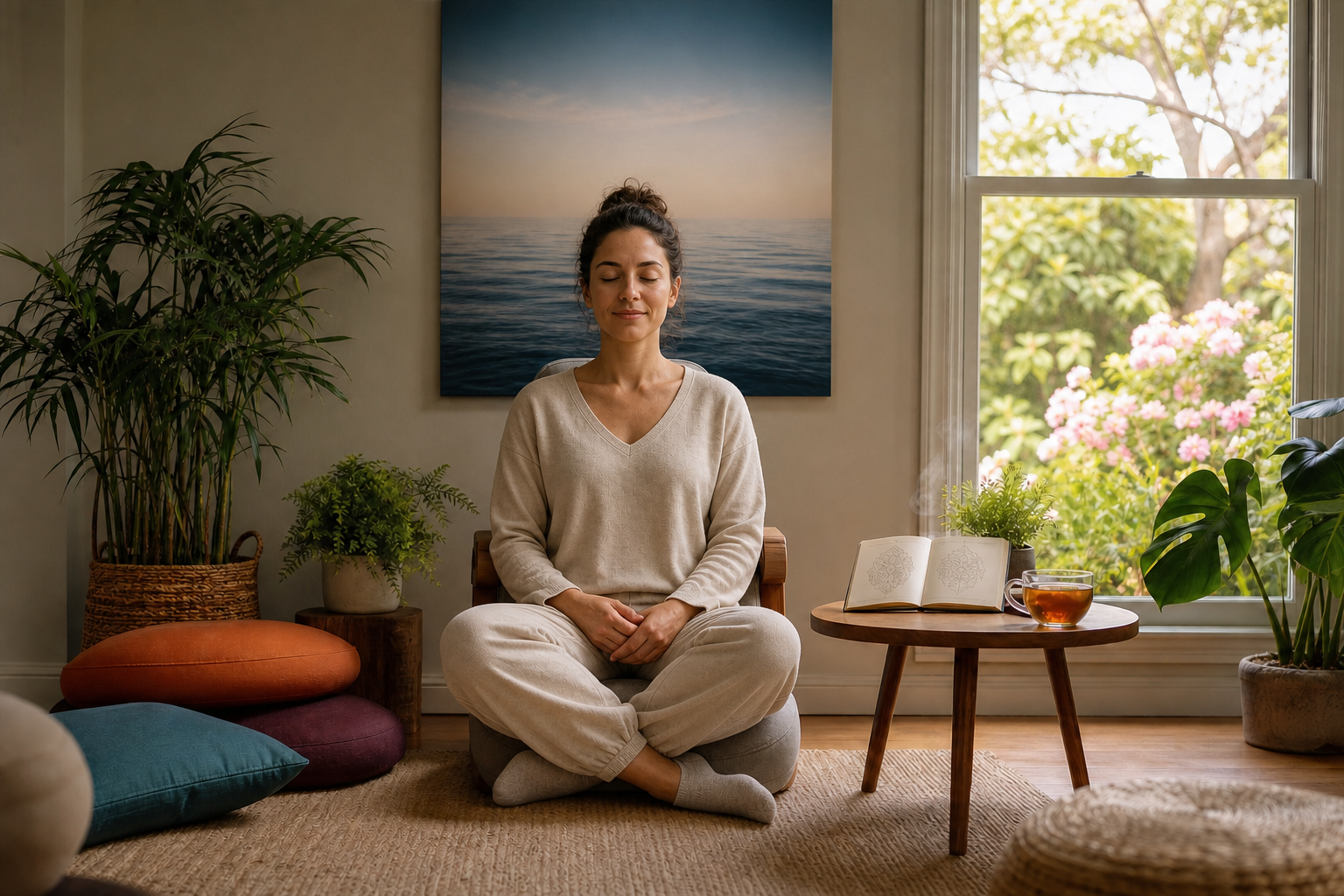
You’ve probably tried it before: meditation. Maybe you sat still for a few minutes, felt restless, and gave up. Or you started out enthusiastic, but after a week, the routine fell by the wayside. You’re not alone. Many beginners stop meditating before they experience the real benefits. This article will help you understand why that happens and how to build a meditation routine that you can actually stick with.
At Transcendental Meditation (TM), we see people every day who have previously tried other forms of meditation without success. Often, this isn’t due to a lack of discipline, but to misconceptions about what meditation is and how to learn it. In this guide, you’ll discover the most common mistakes beginners make and get practical tips for building a sustainable meditation practice.
Key Takeaways: Sticking with Meditation for Beginners in 2026
- Many beginners stop meditating because they have unrealistic expectations or choose the wrong technique for their needs.
- Setting a fixed time and place for your meditation significantly increases the likelihood that your routine will become a lasting habit.
- Meditation doesn’t have to be an effort: effortless techniques like TM don’t require you to control your thoughts.
- Consistency is more important than session length: even two 20-minute sessions a day yield measurable benefits.
- Personal guidance from a certified teacher helps you learn the technique correctly and stick with it.
Why Beginners Stop Meditating
Most people start meditating with a sincere desire: less stress, more peace, and clearer thinking. Yet many give up within a few weeks. Research shows that this is often not due to a lack of motivation, but to a combination of unrealistic expectations and techniques that don’t suit them.
When you start meditating and your mind remains full of thoughts, you may feel like you’re failing. You wonder if you’re doing it right. That doubt undermines your motivation and makes it easier to quit. The problem is often not you, but the approach you’ve chosen.
The Role of Expectations in Meditation Success
One of the biggest pitfalls is expecting meditation to yield dramatic results right away. You sit down, close your eyes, and hope for complete silence in your mind. When that doesn’t happen, you feel disappointed.
Meditation isn’t a competitive sport. It’s a process that takes time. The benefits build up gradually, often without you noticing right away. After a few weeks of consistent practice, many people find that they react more calmly to stressful situations, sleep better, and think more clearly.
The 7 Most Common Meditation Mistakes for Beginners
Below are the mistakes beginners make most often. By recognizing and avoiding them, you’ll increase your chances of sticking with your meditation practice and actually reaping its benefits.
Mistake 1: Trying Too Hard to Stop Your Thoughts
Many people think that meditating means you have to clear your mind. They try to push thoughts away, which actually creates tension. Thoughts are a natural part of meditation. It’s not about stopping thinking, but about how you deal with it.
With TM, you don’t have to make an effort to control your thoughts. The technique works automatically and effortlessly. When thoughts arise, that’s not a problem. You simply return to the mantra and let your mind settle naturally.
Mistake 2: Waiting for the perfect moment
There’s always a reason not to meditate: too busy, too tired, too many distractions. But there’s no such thing as the perfect moment. Waiting until everything is quiet often means you’ll never get started.
The solution is simple: choose a set time and stick to it. Morning or evening doesn’t matter much, as long as it’s consistent. Many TM practitioners meditate twice a day for 20 minutes, often right after waking up and at the end of the workday.
Mistake 3: Practicing Inconsistently
Meditating once a week yields few benefits. The benefits of meditation come from regular practice. If you only meditate occasionally, you won’t build a habit and you won’t experience the cumulative effects.
Consistency is more important than duration. It’s better to meditate for 10 minutes every day than for an hour once a week. After about a month of daily practice, meditation becomes second nature, just like brushing your teeth.
Mistake 4: Choosing the wrong posture
Discomfort while meditating leads to distraction and the urge to stop. Some people force themselves into uncomfortable positions because they think that’s how it’s supposed to be.
You don’t have to sit in the lotus position to meditate. Choose a posture that keeps you comfortable without making you fall asleep. A chair with your feet flat on the floor works just fine. The most important thing is to sit upright and stay relaxed.
Mistake 5: Judging Yourself Too Harshly
After a meditation session where your mind was full of thoughts, you might feel like you’ve failed. This self-critical judgment is counterproductive and can cause you to give up.
There’s no such thing as a bad meditation. Even sessions where your thoughts wandered all over the place have value. You’ve given yourself the time to pause for a moment. That alone has a positive effect on your nervous system.
Mistake 6: Not Seeking Guidance
Many beginners try to learn meditation through videos or written guides. While this is an accessible way to start, they miss out on the nuances and personalized corrections that a teacher can provide.
Imagine learning to play a musical instrument or a sport. Personal instruction makes the difference between superficial practice and truly mastering the technique. In TM, the technique is taught by certified teachers who guide you personally and remain available to answer questions.
Mistake 7: Choosing the Wrong Technique for Your Needs
There are many different meditation techniques, and not every technique suits everyone. Some demand a lot of your attention. Others work with visualizations or breathing rhythms. When a technique doesn’t suit you, it feels like a struggle, and you won’t stick with it.
TM stands out because it’s effortless. You don’t have to focus on your breath or observe your thoughts. The technique works naturally, allowing even people who have trouble sitting still or can’t stop thinking to meditate successfully.
What makes meditation effortless?
Many forms of meditation require active effort: you have to focus on your breath, observe your thoughts, or hold onto visualizations. This can be tiring, especially when your mind is already full.
In TM, you use a personal mantra that you receive from a certified teacher. You repeat this mantra in a specific way, after which your mind naturally moves to quieter levels of thought. We call this process “transcending.” It requires no effort or attention. It happens on its own.
How Transcendence Works
Imagine the ocean. On the surface, there are waves and movement. But deeper in the ocean, it is still. TM enables your mind to go to that deeper stillness, beyond the superficial thoughts.
This is because the technique automatically allows your active, thinking mind to settle down. You don’t have to do anything or achieve anything. The mantra acts as a vehicle that carries your mind inward, toward a state of deep rest and calm alertness.
How to Build a Sustainable Meditation Routine
Building a habit requires more than just good intentions. It requires a system that works with your daily life, not against it. Below are practical steps to make meditation a natural part of your day.
Step 1: Choose a set time
Your brain loves routines. By meditating at the same time every day, it becomes automatic. Many people choose the morning, before the hustle and bustle of the day begins. Others prefer to meditate at the end of the workday to let go of stress.
Experiment and see what works for you. Once you’ve chosen a time, treat it as an important appointment with yourself that you don’t cancel.
Step 2: Create a dedicated space
Having a specific spot for meditation helps your brain get into the right mindset. It doesn’t have to be a special room. A chair in a quiet corner of your living room will do.
Make sure the spot is inviting. A pillow, a blanket, or a plant can help make the space more appealing. The more comfortable the environment, the easier it will be to motivate yourself to sit down.
Step 3: Start small and build up
If you’ve never meditated before, start with short sessions. Even five minutes a day is a good start. As you get used to it, you can increase the duration.
With TM, you meditate for 20 minutes twice a day. This may sound like a lot, but most practitioners find that the time flies by and that the benefits are well worth it. The time you invest pays off in the form of more energy and clarity for the rest of your day.
Step 4: Use a timer
A timer prevents you from checking the clock while you’re meditating. You know you don’t have to sit any longer than you’ve set, so you can fully surrender to the practice.
Make a commitment to yourself to stay seated until the timer goes off, no matter what’s going on in your head. This helps you get through moments of restlessness instead of giving up.
Step 5: Be kind to yourself
There will be days when meditation doesn’t go well or you forget to do it. That’s only human. The most important thing is to start again the next day without criticizing yourself.
Every meditation counts, no matter how it felt. Even a session full of thoughts has value. You took time to rest, and that makes a difference.
The Science Behind Meditation and Stress Reduction
The benefits of meditation aren’t just subjective. Scientific research confirms that regular meditation has measurable effects on the body and mind.
What Research Shows About TM
More than 400 scientific studies have examined the effects of Transcendental Meditation. A study published in *Hormones and Behavior* showed that TM reduces cortisol, the stress hormone, by 30%.
Researchers at Stanford University conducted a meta-analysis of 146 independent studies on meditation techniques. They concluded that TM was twice as effective at reducing stress compared to other techniques.
Effects on the Brain and Nervous System
During TM, brain activity changes measurably. EEG studies show increased alpha waves, which are associated with a state of calm alertness. This explains why practitioners feel both relaxed and clear-headed after meditating.
The technique activates the parasympathetic nervous system, which is responsible for rest and recovery. As a result, heart rate and blood pressure decrease, and breathing normalizes. These physiological changes explain why TM also has positive effects on health.
How TM Differs from Other Meditation Methods
There are many ways to meditate. Some focus on observing thoughts. Others use visualizations or specific breathing exercises. TM differs fundamentally from these approaches.
No Effort Required
Unlike other forms of meditation, TM requires no control of the mind, no contemplation, and no monitoring of thoughts. You don’t have to do anything except follow the simple instructions you receive from your teacher.
This makes TM accessible to everyone, regardless of experience or prior knowledge. Even people who consider themselves hopelessly restless or unable to sit still can successfully practice TM.
Personal Instruction and Guidance
TM is taught exclusively by certified teachers in one-on-one sessions. You’ll receive a mantra chosen specifically for you and learn exactly how to use it.
After the course, you’ll have access to lifelong guidance. You can return for verification of your technique, attend group meditations, and ask questions whenever you have them. This support helps you deepen and sustain your practice.
What to Expect When You Start Meditating
When you first start TM, you often notice something right away. Some people immediately feel a deep sense of calm during their first meditation. Others notice the effects mainly outside of meditation: they sleep better, feel more energetic, or respond more calmly to stress.
The First Few Weeks
In the first few weeks, you’ll build the habit. Your body and mind will adjust to this daily period of rest. Some days, the meditation will feel deep and still. Other days, your mind will be full of thoughts. Both are normal.
It’s important to stay consistent during this period. The benefits accumulate the more you meditate. After a few weeks, many people notice that they don’t get stressed as easily and can handle challenges better.
After a few months
After a few months of regular practice, many practitioners report deeper changes. They feel more like themselves, have more energy, and experience greater joy in daily life.
Research confirms these experiences. Studies show that long-term TM practice is associated with lower blood pressure, reduced anxiety, and improved cognitive functions such as concentration and memory.
Practical Tips for Overcoming Obstacles
Even with the best intentions, you’ll encounter obstacles. Below are solutions to the most common challenges in establishing a meditation routine.
Not having enough time
Everyone is busy. Yet many people find hours each day for screen time. It’s a matter of setting priorities. Meditation is an investment that pays for itself through increased energy and clarity.
If 40 minutes a day seems like too much, start with a single 20-minute session. You can also opt for shorter sessions spread out throughout the day. The most important thing is to get started.
A Busy Mind
A busy mind isn’t an obstacle to meditation. It’s actually the reason to meditate. With TM, you don’t have to control your thoughts. The technique works no matter how many thoughts you have.
When you notice that your mind has wandered, simply return to the mantra. This isn’t a mistake—it’s part of the process. Over time, the periods of stillness will become longer and deeper.
Falling Asleep
If you regularly fall asleep while meditating, this may be a sign that you need more rest. Make sure you get enough sleep and meditate at a time when you’re relatively alert.
Sitting upright also helps. Lying down while meditating makes it easier to doze off. If you sit upright, you’ll stay alert while your body relaxes.
How to Deepen Your Meditation Practice
As you gain more experience with meditation, you can deepen your practice. This doesn’t happen by trying harder, but through consistency and openness.
Regular Verification
With TM, you can return to your teacher for verification sessions. During these sessions, you check whether you’re still practicing the technique correctly and can ask questions about your experiences.
Many practitioners discover that small adjustments to their practice can have a big impact. Regular contact with a teacher keeps you focused and motivated.
Group meditations
Meditating in a group can provide a deeper experience than practicing alone. The shared silence enhances the effect. Moreover, it offers social support and motivation to continue practicing.
TM centers in the Netherlands regularly organize group meditations. This is a great way to connect with other practitioners and deepen your practice.
Frequently Asked Questions About Sticking with Meditation for Beginners
How long does it take before I notice the benefits of meditation?
Most people notice something after just the first few sessions: a sense of calm or relaxation. The deeper benefits, such as reduced stress and better sleep, build up over weeks. With Transcendental Meditation, many practitioners report measurable improvements within a month of consistent practice.
What should I do if my thoughts keep wandering during meditation?
Thoughts during meditation are normal and not a sign of failure. With TM, you don’t have to stop or control your thoughts. When you notice that you’ve wandered off, simply return to the mantra. The technique works effortlessly, no matter how many thoughts arise.
Is meditating twice a day really necessary to see results?
With TM, meditating twice a day for 20 minutes is recommended for optimal results. Research shows that this frequency yields the strongest effects on stress reduction and well-being. If two sessions aren’t feasible, one session a day also provides benefits, albeit to a lesser extent.
Can I learn TM from a book or an online course?
The authentic TM technique is taught exclusively by certified teachers in one-on-one sessions. Just as you learn a musical instrument best with a teacher, personal instruction in meditation offers significant advantages. You’ll receive a personal mantra and learn the subtleties that texts cannot convey.
What if I’m skeptical about meditation?
Skepticism is not a barrier to effective meditation. The effectiveness of TM is the same regardless of whether you believe it will work. More than 400 scientific studies support its benefits. All you need to do is practice the technique correctly.
How does TM differ from other forms of meditation?
TM is distinguished by its effortless nature. You don’t have to focus on your breath, observe your thoughts, or hold onto visualizations. The technique works automatically through a personal mantra that you receive from a certified teacher. This makes TM accessible to everyone, including people who struggle with traditional meditation methods.
Find a teacher
Contact a local certified TM teacher to learn more about the TM course and the many benefits of TM practice.
Find a teacher near you