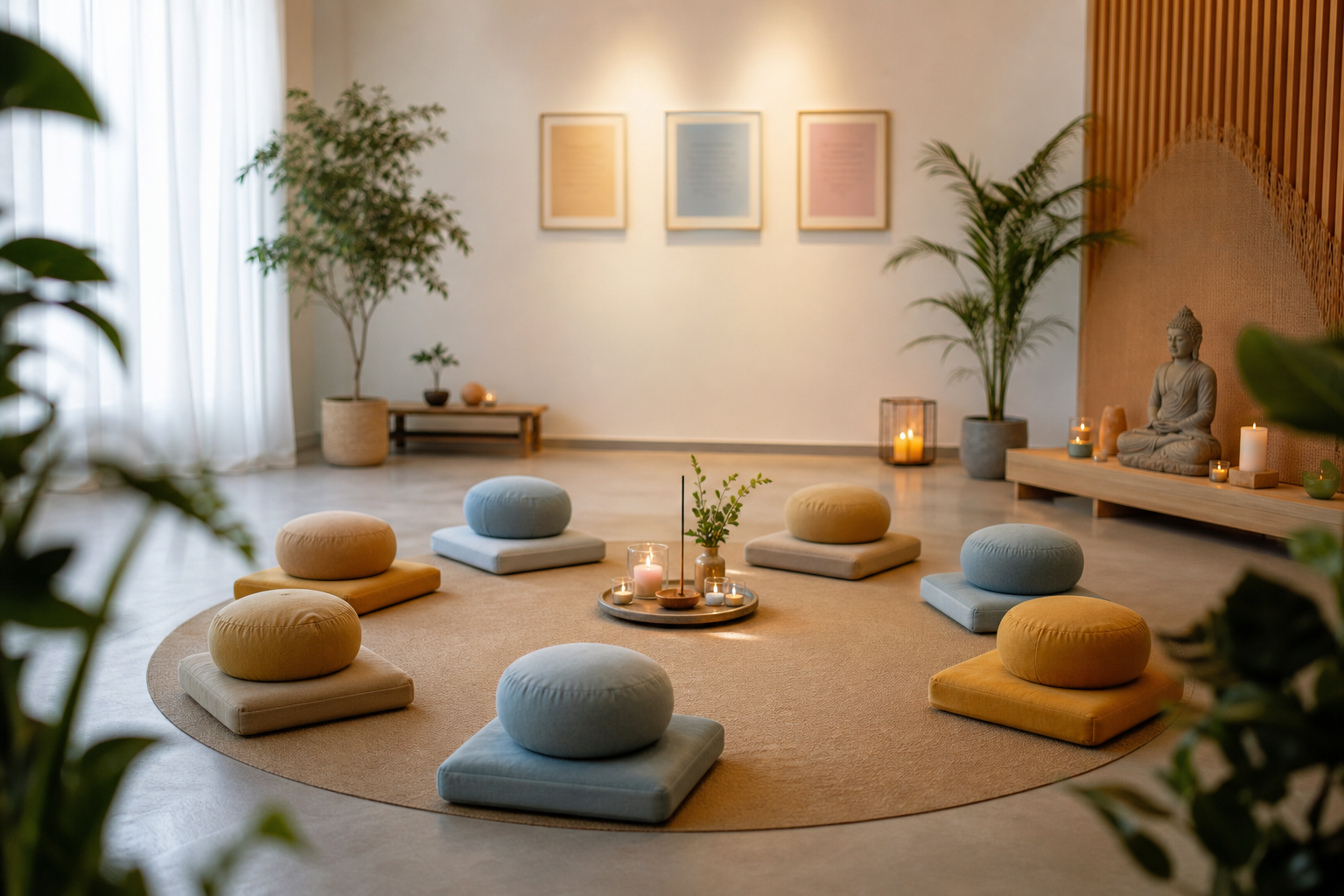
When it comes to chronic stress symptoms, there are two main approaches: a structured meditation course (such as Transcendental Meditation) or a mindfulness course (often in the form of MBSR, consisting of 8 weekly sessions). Both claim to reduce stress—but their structure, guidance, and long-term effectiveness differ significantly.
Structure: fixed curriculum versus flexible program. A structured course like TM follows exactly the same structure for everyone: four consecutive days, with a fixed sequence of instruction and deepening. Mindfulness courses are often designed to be more flexible—which can feel accessible, but also means that the depth varies by provider and by group.
Guidance: Personal versus Group-Oriented. TM is always taught one-on-one on Day 1, with personalized correction. Mindfulness training sessions are typically group-oriented: you practice together, but rarely receive individual feedback on your own practice.
Sustained practice: built-in follow-up versus the end of the course. TM includes lifelong, free “check-ins” if you have doubts about your practice. In most mindfulness courses, guidance ends after the final session.
Effect on chronic stress. Both approaches have been studied, but the mechanisms differ. Mindfulness trains an observant attitude toward stressful thoughts. TM focuses on physiological recovery: a deep state of rest that measurably lowers cortisol (by an average of 30% after a single session).
Which is best for chronic symptoms? For short-term or situational stress, a flexible mindfulness approach may be sufficient. For chronic, persistent stress symptoms, a structured, personally guided, and more deeply effective technique is often more effective.
Curious to find out which approach suits your situation? Attend a free, no-obligation introductory session: https://www.tm.nl/lezingen
Find a teacher
Contact a local certified TM teacher to learn more about the TM course and the many benefits of TM practice.
Find a teacher near you