
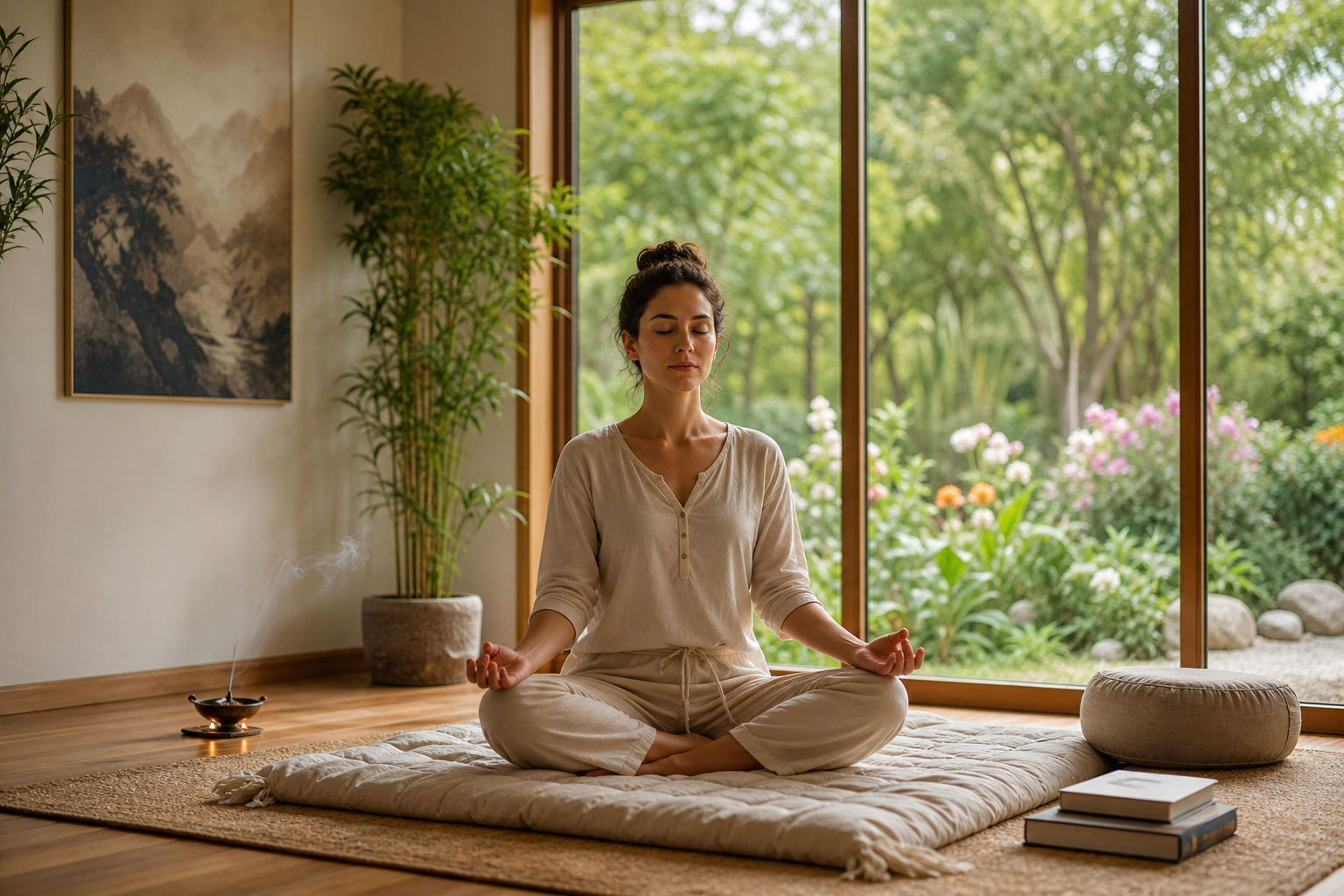

Meditation Training for Stress and Burnout in 2026

Paul Gelderloos
Meditation Training for Stress and Burnout in 2026
14:38
Stress and burnout aren’t just personal problems. They affect your work, your relationships, and your health. Yet for many people, true relief remains out of reach. Meditation training offers a way out, but not every approach yields the same results.
This article explains what structured meditation training entails, why personalized guidance from certified instructors makes all the difference, and how Transcendental Meditation (TM) helps you reduce stress in the long term and prevent burnout.
You’ll also learn about the scientific evidence, what to expect from a course, and how to take the first step toward greater inner peace.
Key Takeaways: Meditation Training for Stress and Burnout in 2026
- Structured meditation training with personalized guidance yields deeper and more lasting results than self-study or digital programs.
- Transcendental Meditation reduces the stress hormone cortisol by an average of 30%, which helps your nervous system recover.
- Burnout prevention starts with daily release of accumulated tension, not just managing symptoms.
- The TM technique is effortless and requires no concentration, making it easy for even busy professionals to fit it into their schedules.
- Scientific research from more than 380 peer-reviewed studies confirms the effectiveness of TM for stress reduction.
What is structured meditation training?
Structured meditation training is a systematic approach in which you learn a meditation technique through a well-defined program. This is in contrast to randomly trying exercises from books or videos.
With a structured approach, you receive personal instruction from a certified teacher. You learn the technique step by step, with the opportunity to ask questions and receive guidance. After the basic course, you receive ongoing guidance to refine your practice.
This differs significantly from following recordings or using digital tools without human interaction. The personal component ensures that you apply the technique correctly and get the most out of your daily practice.
Why choose personal guidance for meditation?
Personal guidance makes the difference between superficial relaxation and real change. A certified instructor can pinpoint exactly where your challenges lie and help you overcome them.
With TM, you receive individual instruction tailored to your situation. The teacher guides you through the learning process and remains available to answer questions, even after the course ends. This lifelong follow-up program is included in the course.
The Benefits of One-on-One Instruction
Personal instruction provides immediate feedback on your technique. Your teacher can make subtle adjustments that make the difference between a superficial experience and truly transcending into a deeper state of peace.
Moreover, you can ask questions specific to your own experience. No two people meditate exactly the same way, and individual guidance takes that into account.
How does meditation training help prevent burnout?
Burnout doesn’t happen overnight. It’s the result of months or years of accumulated stress that has never been fully resolved. Your nervous system becomes exhausted from a constant state of alertness.
Effective meditation training addresses this by releasing the accumulated tension on a daily basis. TM takes you to a state of deep rest that goes even deeper than sleep. This allows your body to recover at a level that would otherwise be unattainable.
The Difference Between Stress Management and Stress Elimination
Many approaches focus on managing stress: techniques for coping with it better. But this does not resolve the underlying cause.
TM goes beyond stress management. The technique eliminates accumulated stress from your nervous system. This is a fundamentally different process than simply learning to cope with stress. Research shows that regular TM practice lowers cortisol levels and activates your body’s natural recovery process.
What does science say about meditation and stress reduction?
The scientific basis for meditation training to manage stress is solid. More than 380 peer-reviewed studies have examined and documented the effects of TM.
A meta-analysis published by researchers shows that TM significantly lowers blood pressure. This reduction is comparable to what you achieve through changes in diet and exercise.
Cortisol Reduction Through TM Practice
Cortisol is the stress hormone your body produces when under stress. Chronically elevated cortisol levels are harmful to your health and contribute to burnout.
Studies show that TM practice reduces cortisol levels by an average of 30%. This does not happen through conscious relaxation, but through the automatic process of transcending that occurs during meditation.
Effects on the Nervous System
The autonomic nervous system regulates your stress response. During chronic stress, this system is constantly on high alert. TM activates the parasympathetic nervous system, leading to deep relaxation and recovery.
EEG research shows increased coherence in brainwave patterns during TM. This indicates an integrated state of calm alertness that combines both relaxation and clarity.
How does TM differ from other meditation approaches?
There are many different forms of meditation, each with its own approach. It’s helpful to understand how TM differs so you can make an informed choice.
TM versus digital meditation programs
Digital programs offer accessibility and flexibility. You can practice whenever it’s convenient for you. However, they lack the personal component that is essential for learning a technique correctly.
With TM, you learn the technique in person from a certified teacher. You receive immediate feedback and can ask questions. This interaction ensures that you practice the technique correctly from the very beginning.
The Importance of Certified Instructors
Not all meditation instructors have the same training. TM teachers undergo several months of intensive training to become certified. They learn not only the technique but also how to teach it effectively.
In the Netherlands, TM is taught by certified teachers at more than 24 centers. These teachers are part of a recognized nonprofit organization dedicated to making inner peace accessible to everyone.
What can you expect from a TM course?
The TM course consists of personal instruction spread over several days. You’ll learn the technique step by step, with plenty of time to practice and ask questions.
The Step-by-Step Learning Process
The course begins with a free introductory lecture where you’ll learn about what TM is and how it works. This is followed by a one-on-one session to answer your questions.
The actual instruction takes place in one-on-one sessions. You’ll receive a personal mantra and learn how to use it. The following days include group sessions to deepen your experience.
Lifetime support included
After the basic course, you’ll have access to lifelong follow-up support. This includes group meditations, personal check-ins, and the opportunity to ask your teacher questions.
The course fee is income-based and can be paid in installments. This makes TM accessible to people in various financial situations.
Who is structured meditation training suitable for?
Meditation training with personal guidance is suitable for anyone who wants to seriously work on reducing stress. You don’t need any prior experience with meditation.
Busy professionals
As a professional with a packed schedule, finding time for meditation often seems impossible. Yet TM takes only 20 minutes twice a day. Many practitioners find that this investment pays off in increased productivity and better decision-making.
The technique requires no concentration or effort. You can meditate at the office, at home, or on the go. This makes it easy to fit into your daily routine.
People with burnout symptoms
If you’re already experiencing signs of burnout, it’s especially important to choose the right approach. A technique that requires effort can be counterproductive when your energy is already low.
TM is effortless. You don’t have to do anything except sit comfortably and practice the technique. This makes it suitable for people who are already weakened by chronic stress.
How do you get started with meditation training for stress reduction?
The first step is to educate yourself. Attend a free introductory lecture to discover what TM entails and whether it’s right for you.
During this lecture, you’ll learn about the scientific background, the learning process, and practical aspects such as time commitment and costs. A certified teacher will answer your questions.
What to Expect from the First Steps
After the introduction, you can schedule a personal consultation. This is an opportunity to ask specific questions and determine whether you’re ready to begin.
If you decide to proceed, you’ll start the course within a few days. Within a week, you’ll have learned the technique and will be able to practice on your own.
Common Misconceptions About Meditation Training
There are several misconceptions about meditation that prevent people from getting started. It’s important to address these.
Misconception 1: You have to be able to stop your thoughts
This is one of the most common misconceptions. With TM, you don’t have to stop or control your thoughts. The technique works precisely by allowing your mind to settle naturally, without coercion.
Misconception 2: You have to believe it works
The effectiveness of TM is independent of your beliefs. Whether you’re skeptical or not, the physiological processes that occur during meditation are the same. Research confirms this.
Misconception 3: You need a lot of time
TM requires 20 minutes twice a day. This is a manageable time commitment that most people can fit into their daily routine, even with a busy schedule.
The Role of Consciousness Development in Burnout Prevention
Burnout prevention goes beyond stress reduction alone. It also involves developing your consciousness so that you can deal with challenges differently.
TM promotes what researchers call “self-actualization”: the development of your full potential. This manifests as greater self-confidence, better decision-making, and a more stable emotional foundation.
How Inner Peace Contributes to Resilience
When you regularly experience deep calm, you build up reserves. Your nervous system becomes more resilient, and you’re better able to cope with life’s inevitable challenges.
This is prevention in the truest sense of the word: you prevent burnout by investing in your inner stability every day, rather than waiting for problems to arise.
Practical tips for building a meditation practice
Learning the technique is step one. Building a sustainable practice requires a little extra attention.
Choose set times
Most practitioners meditate in the morning before breakfast and in the afternoon or early evening. Set times help anchor the habit.
Create a quiet space
You don’t need a special room, but a relatively quiet spot helps. This could be a chair in your bedroom or a quiet corner in your office.
Be patient with yourself
Every meditation session is different. Some sessions feel deep and soothing, others less so. This is normal. The benefits come from regular practice over time, not from any single session.
FAQs about meditation training for stress and burnout
What is the difference between TM and regular meditation?
TM is a specific, structured technique taught by certified teachers. You receive personalized instruction and a mantra tailored to you. With TM, you don’t have to concentrate or control your thoughts.
The technique is effortless and automatically leads to a state of deep rest. This differs from approaches that require you to actively direct your attention.
How quickly do you notice results from meditation training?
Many people experience a sense of deep calm as early as the first few sessions. The broader benefits, such as reduced stress and better sleep, often become noticeable within a few weeks of regular TM practice.
Research shows measurable changes in stress markers after a few months of consistent practice.
Is TM suitable if you’re already experiencing burnout symptoms?
TM is particularly well-suited for people with burnout symptoms because the technique is effortless. You don’t need to expend energy on concentration. TM helps your nervous system recover by providing deep calm.
However, it is advisable to seek professional help if you have severe symptoms. TM can be a valuable complement to other treatments.
How much time does meditation training take each day?
TM requires 20 minutes twice a day. This is the standard recommended for optimal results. The total daily time commitment is 40 minutes.
Many practitioners find that this time pays off in increased efficiency and better focus throughout the rest of the day.
Can anyone learn TM?
TM is accessible to everyone, regardless of age, background, or experience with meditation. The technique requires no special skills or beliefs. TM offers personalized instruction tailored to your situation.
The only requirement is a willingness to invest 20 minutes twice a day in your practice.
What is the cost of a TM course?
The course fee is income-based, making TM accessible to people in various financial situations. Lifetime support and follow-up sessions are included in the price.
You can discuss the exact costs and payment options during a free introductory consultation.